
Follow Me On Social Media!

Spinach Lasagna with Butternut Squash Layers Recipe
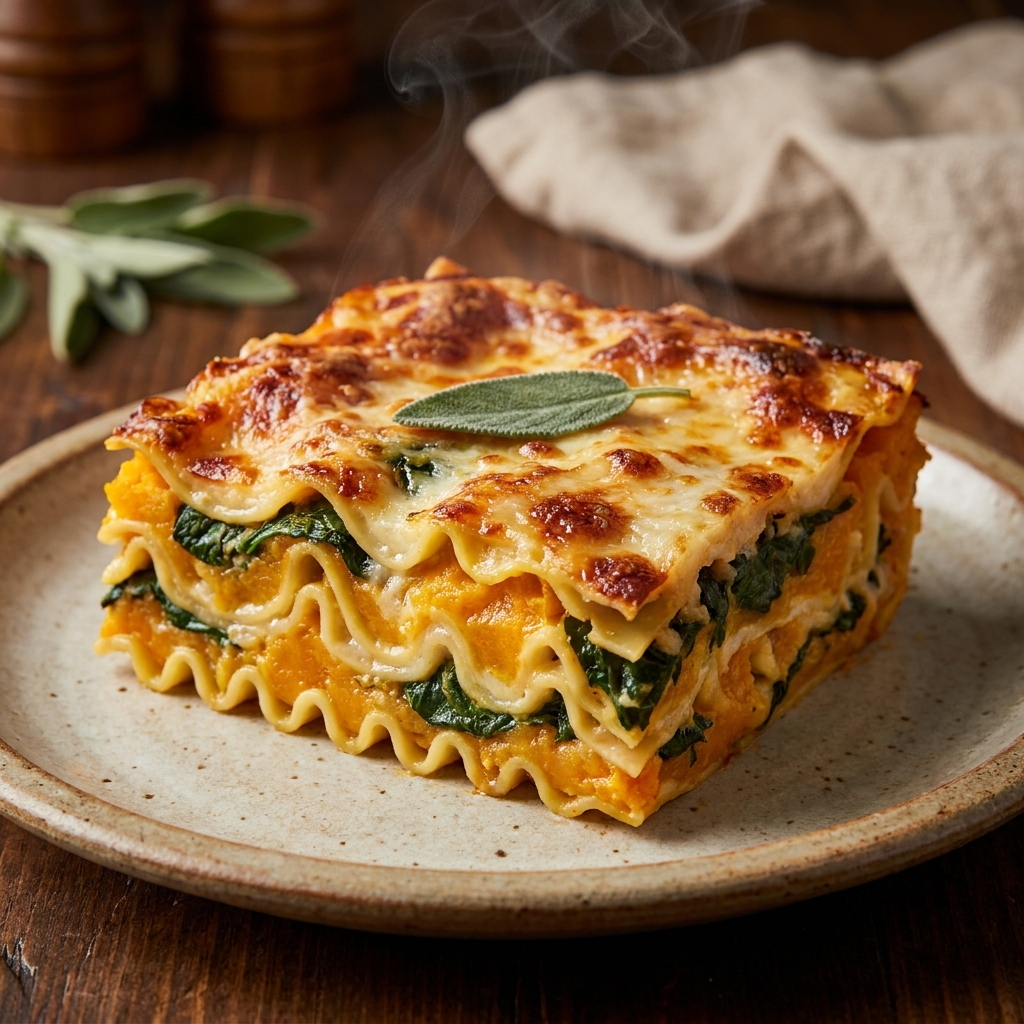
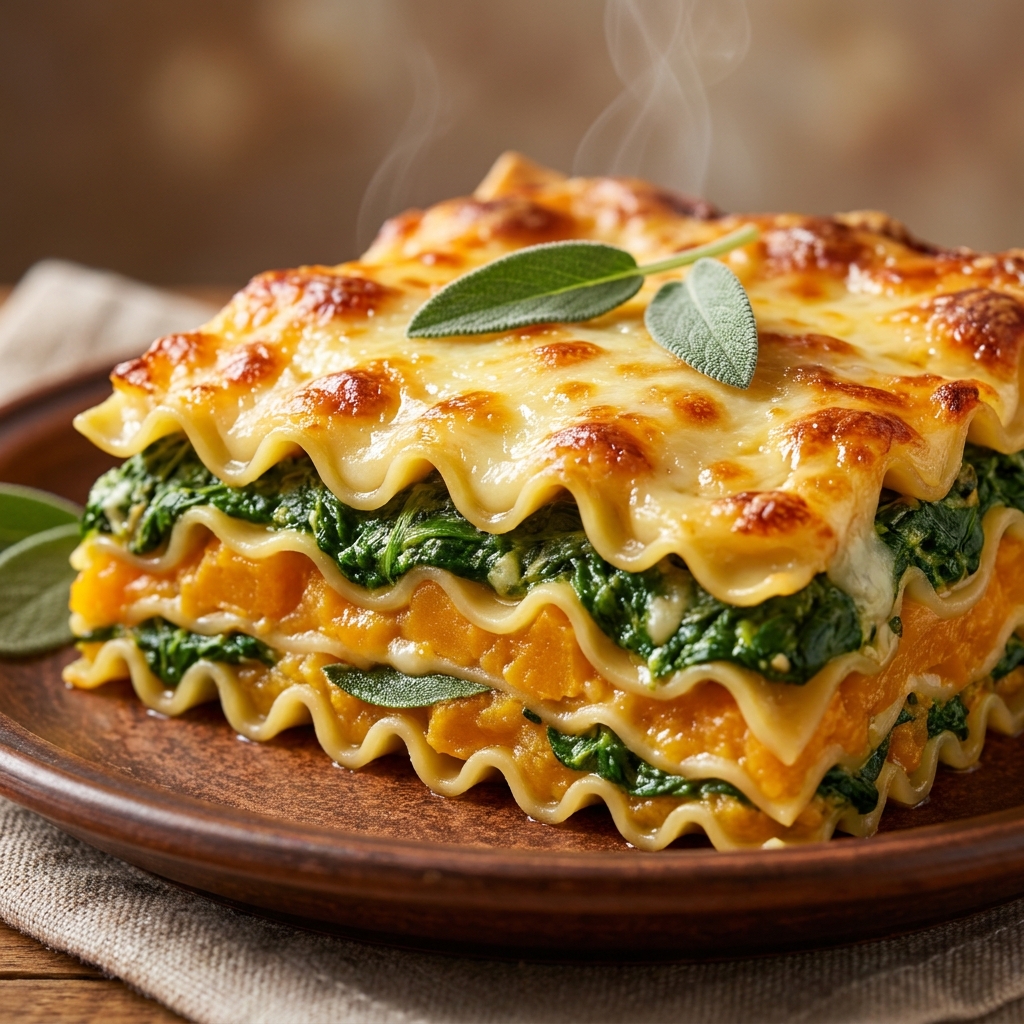
Spinach Lasagna with creamy ricotta, sweet roasted butternut squash, and gooey golden cheese in every warm, cozy bite. Great weeknight dinner. Try it tonight.

This Spinach Lasagna turns watery, bland vegetable lasagna into something you’ll actually crave. Most versions become a soupy mess because nobody drains the squash or squeezes the spinach dry enough. I’ve made this recipe over a dozen times, and my first two attempts were a sloppy disappointment. The magic happens when sweet roasted squash meets garlicky spinach and three melted cheeses, with the top crisping into a crackling golden crust. If you loved my cranberry brie stuffed chicken, this cozy fall dinner belongs on your table too. Jump to the recipe card or keep reading for my best tips. You might also love my cranberry brie stuffed chicken.

What I Use
Ninja Prestige Smart XL Pro Cook System
Getting even squash roasting and consistent lasagna baking is the hardest part of this recipe. I use the Ninja Prestige Smart XL Pro every time — its convection heat roasts squash to perfect caramelization and bakes the lasagna without hot spots. I've relied on it for two years of recipe testing. It's Prime eligible and ships free.
Check Price on Amazon →Why You'll Love This Spinach Lasagna with Butternut Squash Layers Recipe
- The roasted butternut squash adds caramelized sweetness that plain spinach lasagna completely lacks.
- Three cheeses — ricotta, mozzarella, and Parmesan — create layers that stretch, melt, and crisp in distinct ways.
- No-boil noodles absorb vegetable moisture during baking, so every layer sets firmly enough to slice cleanly.
- You can assemble the whole thing a day ahead and bake it straight from the fridge for stress-free entertaining.
Ingredients for Spinach Lasagna with Butternut Squash Layers Recipe
Exact amounts are in the printable recipe card below — here's what you'll need at a glance.
Main Ingredients
- 3 cups butternut squash, peeled and cubed (½-inch cubes)
- 1 tbsp olive oil (for roasting squash)
- 1 tbsp olive oil (for sautéing spinach)
- 3 cloves garlic, minced
- 10 oz frozen chopped spinach, thawed
- 15 oz whole milk ricotta cheese
- 1 large egg, beaten
- ½ cup grated Parmesan cheese
- 9 no-boil lasagna noodles
- 2 cups shredded part-skim mozzarella cheese, divided
- 1½ cups marinara sauce
Seasonings & Flavors
- ½ tsp salt (for squash)
- ¼ tsp black pepper (for squash)
- ½ tsp salt (for ricotta mixture)
- ¼ tsp ground nutmeg
- ½ tsp dried sage (optional)
Optional Toppings
- (Optional) Fresh sage leaves, crisped in butter
- (Optional) Extra Parmesan cheese, freshly grated
- (Optional) Toasted pine nuts
- (Optional) Red pepper flakes
- (Optional) Fresh basil leaves
Ingredient Notes
- butternut squash: Roasting concentrates its natural sugars and removes surface water. Under-roasted squash stays watery and bland. Sweet potato works as a swap but lacks the nutty depth.
- frozen spinach: Frozen holds its shape better than fresh after squeezing. This is the biggest failure point — it must be squeezed bone-dry in a kitchen towel until no green liquid drips out.
- ricotta cheese: Whole milk ricotta is creamier and less grainy than part-skim. Drain it in a fine mesh strainer for 10 minutes if it looks wet before mixing.
- no-boil lasagna noodles: These absorb moisture from the filling and sauce as they bake. If your filling is very wet, they turn gummy. Standard boiled noodles work too but add 10 minutes prep.
- ground nutmeg: Freshly grated nutmeg brightens both dairy and spinach. Pre-ground works but tastes flatter. Do not skip — it is the flavor that makes this taste professional.
- mozzarella cheese: Part-skim melts well without pooling oil. Shred it yourself — pre-shredded bags have anti-caking agents that prevent smooth, even melting.
How to Make Spinach Lasagna with Butternut Squash Layers Recipe Step by Step
Roast the Butternut Squash
Toss 3 cups cubed butternut squash with 1 tablespoon olive oil, ½ teaspoon salt, and ¼ teaspoon black pepper. Spread in a single layer on a parchment-lined baking sheet. Roast at 400°F for 18–22 minutes until the edges caramelize to deep golden brown and a fork slides through easily. Watch for charred edges — a few dark spots are good, but blackened cubes mean bitterness. Let cool 5 minutes on the pan.
Squeeze and Sauté the Spinach
Take 10 ounces thawed frozen spinach and squeeze it in a clean kitchen towel in small fistfuls, twisting hard until no more green liquid drips out. Heat 1 tablespoon olive oil in a large skillet over medium heat. Add 3 cloves minced garlic and cook 30 seconds until fragrant but not browned. Add the squeezed spinach and cook 3–4 minutes, stirring constantly. The spinach should look dark green and completely dry. If water pools in the pan, keep cooking until it evaporates.
Mix the Ricotta Filling
In a large bowl, combine 15 ounces ricotta cheese, 1 beaten egg, ½ cup grated Parmesan, ¼ teaspoon ground nutmeg, and ½ teaspoon salt. Stir until smooth and well blended. Fold in the cooked spinach mixture until evenly distributed. Taste a small spoonful — it should taste seasoned and slightly nutty. If it tastes bland, add another pinch of salt.
Assemble the Lasagna Layers
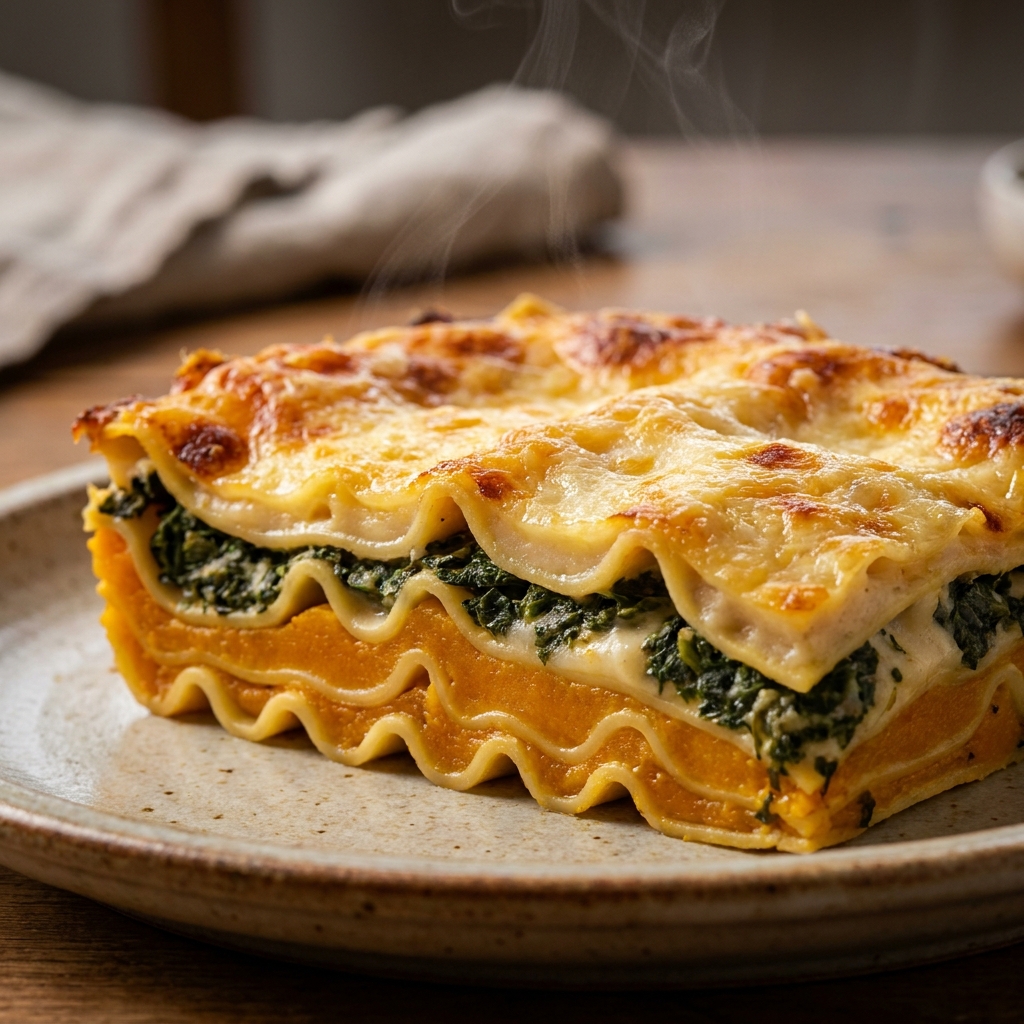
Spread ½ cup marinara sauce across the bottom of a greased 9×13 baking dish. Lay 3 no-boil noodles over the sauce. Spread half the ricotta-spinach mixture evenly over the noodles. Arrange half the roasted squash cubes over the ricotta. Sprinkle 1 cup shredded mozzarella. Add 3 more noodles, then repeat with remaining ricotta, remaining squash, and 1 cup mozzarella. Top with final 3 noodles, remaining sauce, and last 1 cup mozzarella. Watch for gaps — press noodles gently to submerge edges in sauce so they soften during baking.
Bake Covered
Spray a sheet of foil with cooking spray and cover the dish tightly. Bake at 375°F for 30 minutes. The edges should be bubbling gently and the noodles will look softened. Watch for foil touching the cheese — if it sticks, the top layer tears off when you remove it.
Bake Uncovered and Rest
Remove the foil and bake 15–20 more minutes until the top is deep golden brown with bubbling cheese around all edges. The center should read 165°F on a probe thermometer. Let the lasagna rest 10–15 minutes before slicing — this is non-negotiable. Cutting too early causes the layers to slide apart and release a flood of steam and liquid.
Pro Tips for the Best Spinach Lasagna with Butternut Squash Layers Recipe
- Ingredient prep: Roast the squash the day before and refrigerate overnight. Cold squash is firmer and easier to arrange in even layers without smashing or breaking apart during assembly.
- Common mistake and fix: The number one failure point is watery lasagna from wet spinach. Frozen spinach holds up to ½ cup of hidden water even after thawing. Squeeze it in a clean kitchen towel in fistfuls, twisting hard until no green liquid drips out. If you skip this, the ricotta thins out and the bottom noodles turn to mush. Already happened? Bake uncovered an extra 10 minutes to evaporate excess moisture, then let rest 20 minutes before slicing.
- Temperature control: Let the baked lasagna rest a full 15 minutes before cutting. The internal temperature continues to rise and the cheese re-solidifies enough to hold clean layers. Cutting at 5 minutes means molten cheese slides everywhere.
- Flavor enhancement: Add freshly grated nutmeg to the ricotta mixture. Nutmeg has an affinity for dairy and spinach that plain salt cannot match. It is the secret ingredient that makes this taste like restaurant lasagna.
Storing and Reheating Spinach Lasagna with Butternut Squash Layers Recipe
Refrigerator Storage
Store leftover lasagna in an airtight glass container for up to 4 days. Cover the surface with a layer of foil or plastic wrap pressed directly against the cheese to prevent drying.
Freezing Spinach Lasagna with Butternut Squash Layers Recipe
Freeze individual slices wrapped tightly in plastic wrap, then sealed in a freezer bag for up to 2 months. Thaw overnight in the fridge before reheating.
Reheating in the Oven
Cover a slice with foil and reheat at 350°F for 12–15 minutes until the center reaches 165°F. The foil prevents the top from burning while the middle warms. Add a sprinkle of water around the slice edges to restore moisture.
Reheating in the Microwave
Cover with a damp paper towel and heat at 70% power for 90 seconds. The lower power prevents rubbery cheese and the damp towel keeps the noodles from turning tough.
Make Ahead
Assemble the entire lasagna up to 24 hours ahead, cover with foil, and refrigerate unbaked. Add 10–15 extra minutes of covered baking time since it starts cold. Hold the final mozzarella layer until just before the uncovered baking phase.
Spinach Lasagna with Butternut Squash Layers Recipe
Prep
25 minutes
Cook
55 minutes
Total
1 hour 20 minutes
Yield
6 servings
Category
Dinner
Method
Baking
Cuisine
American
Diet
Vegetarian
Ingredients
Main Ingredients
- 3 cups butternut squash, peeled and cubed (½-inch cubes)
- 1 tbsp olive oil (for roasting squash)
- 1 tbsp olive oil (for sautéing spinach)
- 3 cloves garlic, minced
- 10 oz frozen chopped spinach, thawed
- 15 oz whole milk ricotta cheese
- 1 large egg, beaten
- ½ cup grated Parmesan cheese
- 9 no-boil lasagna noodles
- 2 cups shredded part-skim mozzarella cheese, divided
- 1½ cups marinara sauce
Seasonings & Flavors
- ½ tsp salt (for squash)
- ¼ tsp black pepper (for squash)
- ½ tsp salt (for ricotta mixture)
- ¼ tsp ground nutmeg
- ½ tsp dried sage (optional)
Optional
- Fresh sage leaves, crisped in butter
- Extra Parmesan cheese, freshly grated
- Toasted pine nuts
- Red pepper flakes
- Fresh basil leaves
Instructions
- 1Roast the Butternut Squash: Toss 3 cups cubed butternut squash with 1 tablespoon olive oil, ½ teaspoon salt, and ¼ teaspoon black pepper. Spread in a single layer on a parchment-lined baking sheet. Roast at 400°F for 18–22 minutes until the edges caramelize to deep golden brown and a fork slides through easily. Watch for charred edges — a few dark spots are good, but blackened cubes mean bitterness. Let cool 5 minutes on the pan.
- 2Squeeze and Sauté the Spinach: Take 10 ounces thawed frozen spinach and squeeze it in a clean kitchen towel in small fistfuls, twisting hard until no more green liquid drips out. Heat 1 tablespoon olive oil in a large skillet over medium heat. Add 3 cloves minced garlic and cook 30 seconds until fragrant but not browned. Add the squeezed spinach and cook 3–4 minutes, stirring constantly. The spinach should look dark green and completely dry. If water pools in the pan, keep cooking until it evaporates.
- 3Mix the Ricotta Filling: In a large bowl, combine 15 ounces ricotta cheese, 1 beaten egg, ½ cup grated Parmesan, ¼ teaspoon ground nutmeg, and ½ teaspoon salt. Stir until smooth and well blended. Fold in the cooked spinach mixture until evenly distributed. Taste a small spoonful — it should taste seasoned and slightly nutty. If it tastes bland, add another pinch of salt.
- 4Assemble the Lasagna Layers: Spread ½ cup marinara sauce across the bottom of a greased 9×13 baking dish. Lay 3 no-boil noodles over the sauce. Spread half the ricotta-spinach mixture evenly over the noodles. Arrange half the roasted squash cubes over the ricotta. Sprinkle 1 cup shredded mozzarella. Add 3 more noodles, then repeat with remaining ricotta, remaining squash, and 1 cup mozzarella. Top with final 3 noodles, remaining sauce, and last 1 cup mozzarella. Watch for gaps — press noodles gently to submerge edges in sauce so they soften during baking.
- 5Bake Covered: Spray a sheet of foil with cooking spray and cover the dish tightly. Bake at 375°F for 30 minutes. The edges should be bubbling gently and the noodles will look softened. Watch for foil touching the cheese — if it sticks, the top layer tears off when you remove it.
- 6Bake Uncovered and Rest: Remove the foil and bake 15–20 more minutes until the top is deep golden brown with bubbling cheese around all edges. The center should read 165°F on a probe thermometer. Let the lasagna rest 10–15 minutes before slicing — this is non-negotiable. Cutting too early causes the layers to slide apart and release a flood of steam and liquid.
Recipe Notes
- Chef tip: Roast the squash until the edges are deeply caramelized — almost burnt at the tips. Those dark edges are where the concentrated sweetness lives, and they separate this lasagna from bland steamed-squash versions.
- Best substitution: Replace butternut squash with sweet potato for a sweeter, denser filling. You lose the nutty depth but gain creamier texture. Roast sweet potato cubes the same way, but check 2 minutes earlier since they soften faster.
- Make-ahead: Assemble the lasagna up to 24 hours ahead and refrigerate unbaked covered in foil. Add 10–15 extra minutes of covered baking time. Do not add the final mozzarella layer until just before the uncovered baking phase, or it dries out in the fridge.
- Scaling: Double the recipe for a crowd using two 9×13 dishes. Bake both on the same rack with 2 inches between them for airflow. Do not stack dishes — the bottom bakes unevenly and the top burns.
- Troubleshooting: If your lasagna is watery when sliced, the cause is almost always insufficient moisture removal from the spinach or under-roasted squash. Squeeze the spinach until the towel is soaked and roast the squash until edges caramelize. To rescue a watery batch, let it rest 20 minutes uncovered so steam escapes, then reheat slices at 350°F to evaporate remaining liquid.
Nutrition Per Serving
- Calories: 420 kcal
- Protein: 18g
- Fat: 22g
- Saturated Fat: 12g
- Carbohydrates: 38g
- Fiber: 4g
- Sugar: 6g
- Sodium: 580mg
- Cholesterol: 75mg
Nutritional values are estimates only. Actual values may vary by brand and portion size.
Made this recipe?
I’d love to see how your Spinach Lasagna with Butternut Squash Layers Recipe turned out — leave a star rating and a comment below. I read every one!
Frequently Asked Questions about Spinach Lasagna with Butternut Squash Layers Recipe
How do I prevent my spinach lasagna from being watery?
Thawed frozen spinach holds surprising amounts of hidden water that turns lasagna into soup. Squeeze it in a clean kitchen towel in small fistfuls, twisting hard until no more green liquid drips out. Roast the butternut squash at 400°F until the edges caramelize, which drives off surface moisture. Let the baked lasagna rest 15 minutes before slicing so the layers set. These three steps eliminate 90% of sogginess issues.
Can I use fresh spinach instead of frozen in this spinach lasagna?
Yes, but you will need about 20 ounces of fresh spinach to equal 10 ounces frozen after cooking. Sauté it in batches until completely wilted, then squeeze dry the same way. Fresh spinach actually releases less water than frozen, which helps. The flavor is slightly brighter but less concentrated than frozen.
What is the best way to reheat leftover spinach lasagna?
Cover a slice with foil and reheat in a 350°F oven for 12–15 minutes until the center reaches 165°F. The foil prevents the top from burning while the middle warms through. For microwave reheating, cover with a damp paper towel and heat at 70% power for 90 seconds. The lower power prevents rubbery cheese and soggy noodles.
Is this spinach lasagna good for Thanksgiving or Christmas dinner?
Absolutely — this is an ideal holiday vegetarian main dish or hearty side. The butternut squash makes it feel seasonal and festive, and it pairs beautifully with turkey or stands alone for meatless guests. You can assemble it the day before and bake it while the turkey rests. The squash and nutmeg flavors echo classic holiday spices.
Can I freeze spinach lasagna before baking?
Yes, assemble it fully but do not bake. Wrap the entire dish tightly in plastic wrap, then a layer of heavy foil, and freeze for up to two months. Thaw overnight in the refrigerator before baking. Add 15 extra minutes of covered baking time since it starts cold. The texture stays excellent because the noodles and cheese handle freezing well.




[…] while squash caramelizes fills the kitchen with a warm, nutty perfume. For another cozy dinner, my Hearty Butternut Squash & Spinach Lasagna pairs similar fall flavors with a creamy twist. Jump to the recipe card or keep reading for my best […]