
Follow Me On Social Media!

Apple Honey Dijon Chicken Breasts — Golden Juicy Bake
Apple Honey Dijon Chicken Breasts turn golden and sticky in just 35 minutes. Juicy chicken with caramelized apples and tangy honey glaze. Get the recipe now.

Apple Honey Dijon Chicken Breasts solve the weeknight dinner problem of dry, bland chicken with one sticky-sweet glaze. Most baked chicken breast recipes leave you chewing through rubbery meat with a sauce that slides right off. After burning the honey glaze twice and serving soggy apples more times than I’d admit, I cracked the technique. The smell of caramelized Dijon and honey hitting a hot pan is reason enough to try this. For another weeknight favorite that nails juicy chicken, check out my Lemon Chicken Orzo. Jump to the recipe card or keep reading for my best tips. You might also love my Lemon Chicken Orzo.
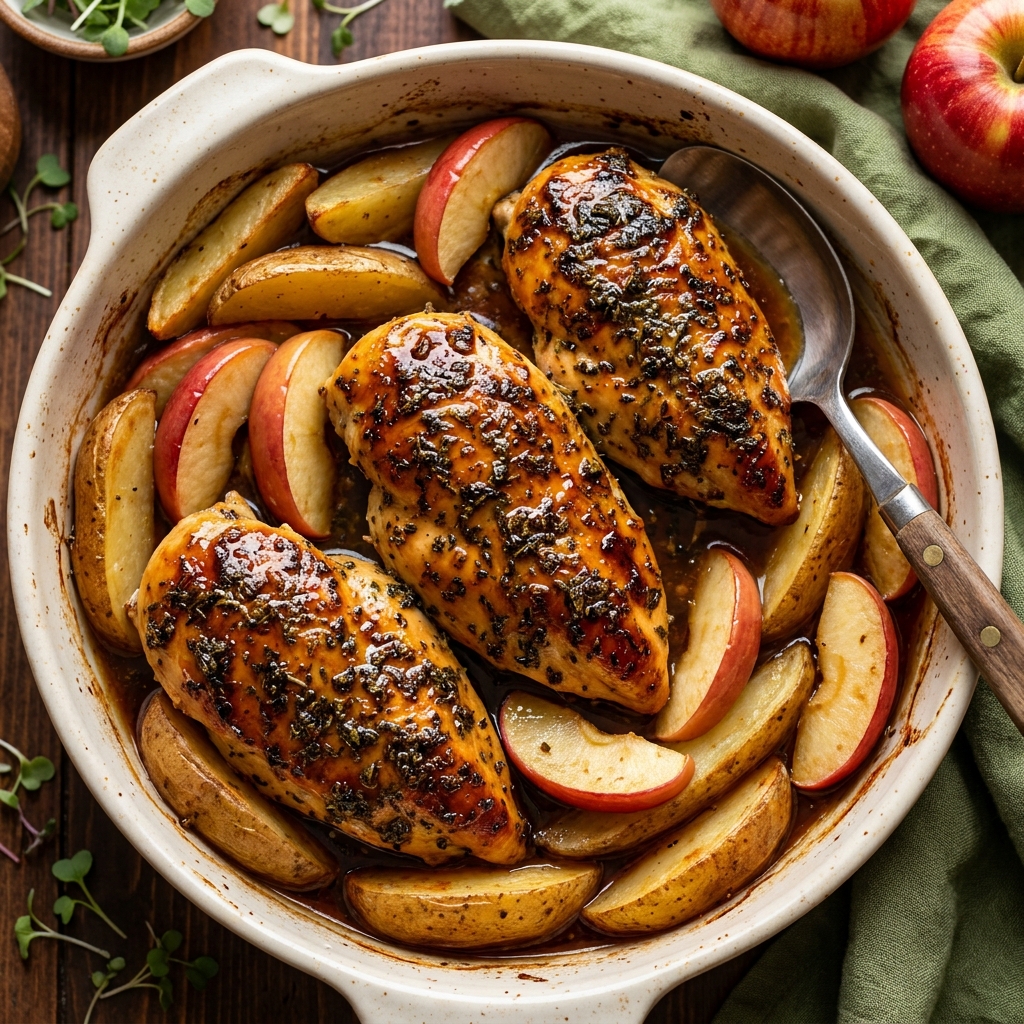

What I Use
Ninja Prestige Smart XL Pro Cook System
Honey glazes burn fast and uneven ovens make it worse. I use the Ninja Prestige Smart XL Pro because its built-in probe tells me exactly when the chicken hits 165°F without opening the door. Its precise convection keeps the glaze golden, not charred. I've relied on it for over a year of recipe testing and it ships free with Prime.
Check Price on Amazon →Why You'll Love This Apple Honey Dijon Chicken Breasts — Golden Juicy Bake
- The two-stage baking method keeps the honey glaze from burning while the chicken center reaches 165°F.
- Honeycrisp apples hold their shape under heat instead of dissolving into applesauce mush.
- The Dijon-to-honey ratio hits sweet and tangy in the same bite without tasting like dessert.
- Everything cooks on one pan so cleanup is a single dish rinse.
Ingredients for Apple Honey Dijon Chicken Breasts — Golden Juicy Bake
Exact amounts are in the printable recipe card below — here's what you'll need at a glance.
Main Ingredients
- 4 boneless skinless chicken breasts (6–8 oz each)
- 2 Honeycrisp apples, cored and cut into 8 wedges each
- 3 tbsp Dijon mustard
- 3 tbsp honey
- 2 tbsp olive oil
- 1 tbsp apple cider vinegar
- 2 cloves garlic, minced
Seasonings & Flavors
- 1 tsp kosher salt
- 1/2 tsp black pepper
- 1/2 tsp dried thyme
- 1/4 tsp smoked paprika
Optional Toppings
- (Optional) Fresh thyme sprigs
- (Optional) Crumbled feta cheese
- (Optional) Toasted chopped pecans
- (Optional) Flaky sea salt
Ingredient Notes
- Boneless skinless chicken breasts: Pick breasts that are close in size so they finish cooking at the same time. If yours are thick on one end, pound them to even thickness with a meat mallet. Uneven breasts are the top reason some pieces dry out while others stay pink.
- Honeycrisp apples: Honeycrisp apples hold their shape under heat better than almost any other variety. Gala or Fuji will work but go softer. Avoid McIntosh — it turns to mush in the oven and waters down the glaze.
- Dijon mustard: Dijon adds tang and helps emulsify the honey and oil into a glaze that clings. Whole-grain mustard works but gives a rougher texture and milder bite. Yellow mustard is too vinegary and thin for this glaze.
- Honey: Use a mild, clear honey like clover. Darker honeys like buckwheat overpower the Dijon. The sugar content is what caramelizes, so don't substitute with maple syrup — it burns at a lower temperature and turns bitter.
- Apple cider vinegar: The acid brightens the glaze and cuts through the honey's sweetness. It also helps tenderize the chicken surface so the glaze penetrates. Rice vinegar works in a pinch but is milder.
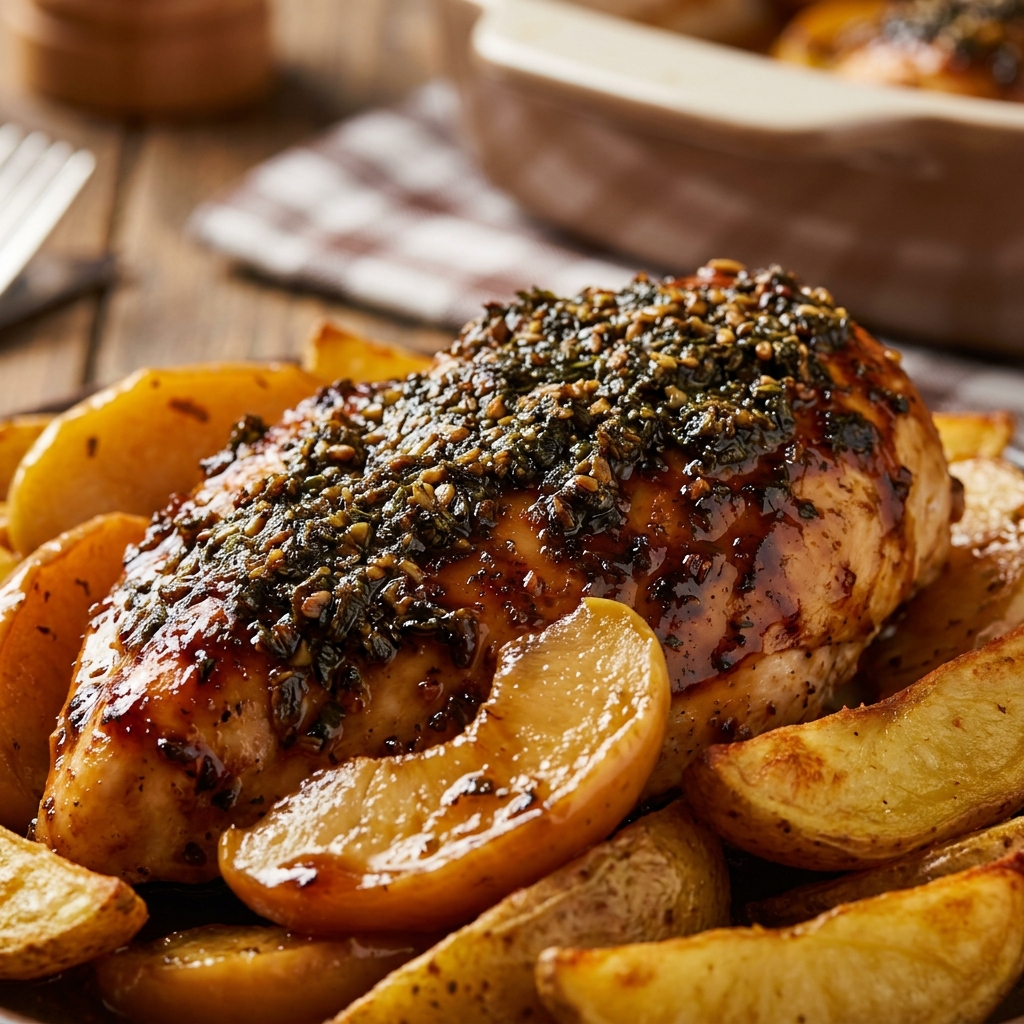
How to Make Apple Honey Dijon Chicken Breasts — Golden Juicy Bake Step by Step
Prep and Season the Chicken
Pat 4 boneless skinless chicken breasts completely dry with paper towels. Moisture on the surface is why glaze slides off instead of sticking. If any breast is thicker than 1.5 inches on one end, place it in a zip-top bag and pound gently to even thickness. Combine 1 tsp kosher salt, 1/2 tsp black pepper, 1/2 tsp dried thyme, and 1/4 tsp smoked paprika in a small bowl. Sprinkle the seasoning on both sides of each breast. Press it in with your fingers so it adheres. What to watch for: if the chicken looks wet when you season it, the spices will clump and slide — dry it more.
Make the Honey Dijon Glaze
In a medium bowl, whisk together 3 tbsp Dijon mustard, 3 tbsp honey, 2 tbsp olive oil, 1 tbsp apple cider vinegar, and 2 minced garlic cloves. Whisk vigorously for about 30 seconds until the mixture is smooth and fully emulsified with no oil streaks on the surface. You should see a thick, glossy paste that coats the back of a spoon. If the glaze looks thin and separated, keep whisking — the mustard acts as the emulsifier that binds honey and oil together. What to watch for: a separated glaze means it will pool at the pan bottom instead of coating the chicken.
Assemble the Bake
Preheat your oven to 375°F. Lightly oil a 9×13 inch baking dish or line it with parchment paper. Arrange the seasoned chicken breasts in a single layer with at least an inch of space between each piece. Tuck 2 cored and sliced Honeycrisp apples around the chicken in the gaps. Pour the glaze evenly over the chicken and apples, using a silicone brush to coat every surface. Flip each breast once so both sides are glazed. What to watch for: if chicken pieces touch, they steam instead of bake and the glaze won't caramelize properly.
First Bake — Covered
Cover the baking dish tightly with aluminum foil. Bake at 375°F for 15 minutes. The foil traps steam so the chicken cooks gently and the glaze heats without burning. You'll smell honey and mustard warming but not browning. The apples will start to soften at the edges but still hold their wedge shape. What to watch for: if you see smoke or smell burnt sugar before 15 minutes, your oven runs hot — drop the temperature to 350°F and continue covered.
Uncover, Baste, and Finish Baking
Remove the foil carefully — hot steam will escape. Use a silicone basting brush to scoop the pooled glaze from the pan bottom and paint it back over the chicken and apples. Return to the oven uncovered and bake another 8–13 minutes at 375°F. The chicken is done when the internal temperature reaches 165°F at the thickest part. Visually, the glaze should be deep amber and sticky, the apple edges should be caramelized and slightly wrinkled, and the chicken surface should glisten. What to watch for: if the glaze darkens past deep amber toward black before the chicken hits 165°F, tent loosely with foil and continue baking.
Rest and Serve
Remove the dish from the oven and transfer the chicken to a cutting board or platter. Let it rest for 5 minutes before slicing or serving. Resting lets the muscle fibers relax and redistribute juices — cut too early and you'll lose moisture on the board. Spoon the caramelized apples and any remaining pan glaze over the chicken. Garnish with fresh thyme sprigs, crumbled feta, or toasted pecans if using. What to watch for: clear juice pooling under the chicken during rest means it's perfectly cooked — pink juice means it needed another minute or two.
Pro Tips for the Best Apple Honey Dijon Chicken Breasts — Golden Juicy Bake
- Ingredient prep: Slice apples immediately before assembling. If you slice them more than 30 minutes ahead, toss them in a bowl with 1 tsp of lemon juice to prevent browning. Oxidized apples won't caramelize as evenly in the oven.
- Common mistake and fix: The #1 failure is burnt honey glaze with undercooked chicken centers. This happens because honey caramelizes at around 320°F, well below the temperature chicken needs to reach 165°F internally. The fix is the two-stage bake: cover with foil for the first 15 minutes so the glaze heats gently, then uncover for the final stretch to caramelize. If your glaze already burned, scrape off the dark bits, tent with foil, and finish baking — the chicken underneath is still salvageable.
- Timing and temperature: Pull the chicken out of the fridge 15 minutes before baking. Ice-cold chicken takes longer to cook through, which means the glaze sits in the oven longer and burns. Room-temp breasts cook more evenly and finish closer to the same time as the apples.
- Texture enhancement: For a thicker, lacquered glaze, reserve 1 tbsp of the honey-Dijon mixture before baking. During the last 3 minutes, brush the reserved glaze over the chicken for a second coat. It creates a layered, sticky finish that the first coat alone can't achieve.
Storing and Reheating Apple Honey Dijon Chicken Breasts — Golden Juicy Bake
Refrigerator Storage
Store leftover chicken and apples in an airtight glass container in the fridge for up to 3 days. Glass keeps the honey glaze from absorbing plastic flavors. Do not leave at room temperature for more than 2 hours after baking.
Freezing Apple Honey Dijon Chicken Breasts — Golden Juicy Bake
Wrap each chicken breast individually in plastic wrap, then place in a freezer-safe zip-top bag with the air pressed out. Freeze for up to 2 months. The apples will be softer after thawing but still taste good in the glaze.
Reheating in the Oven
Reheat in a 325°F oven for 12–15 minutes. Place the chicken in a baking dish with 1 tbsp of water or apple juice to create steam and restore moisture. Cover with foil to prevent the glaze from burning again.
Reheating in the Microwave
Microwave at 50% power for 90 seconds per breast. Place a damp paper towel over the chicken to trap steam and prevent the glaze from turning gummy. Check at 60 seconds and add 30-second intervals as needed.
Make Ahead
Mix the glaze, slice the apples, and season the chicken up to 24 hours ahead. Store each component separately in the fridge. Assemble and bake when ready — the glaze will thicken slightly in the fridge, so whisk it briefly before pouring.
Apple Honey Dijon Chicken Breasts — Golden Juicy Bake
Prep
10 minutes
Cook
28 minutes
Total
38 minutes
Yield
4 servings
Category
easy dinners
Method
Baking
Cuisine
American
Diet
Gluten-Free
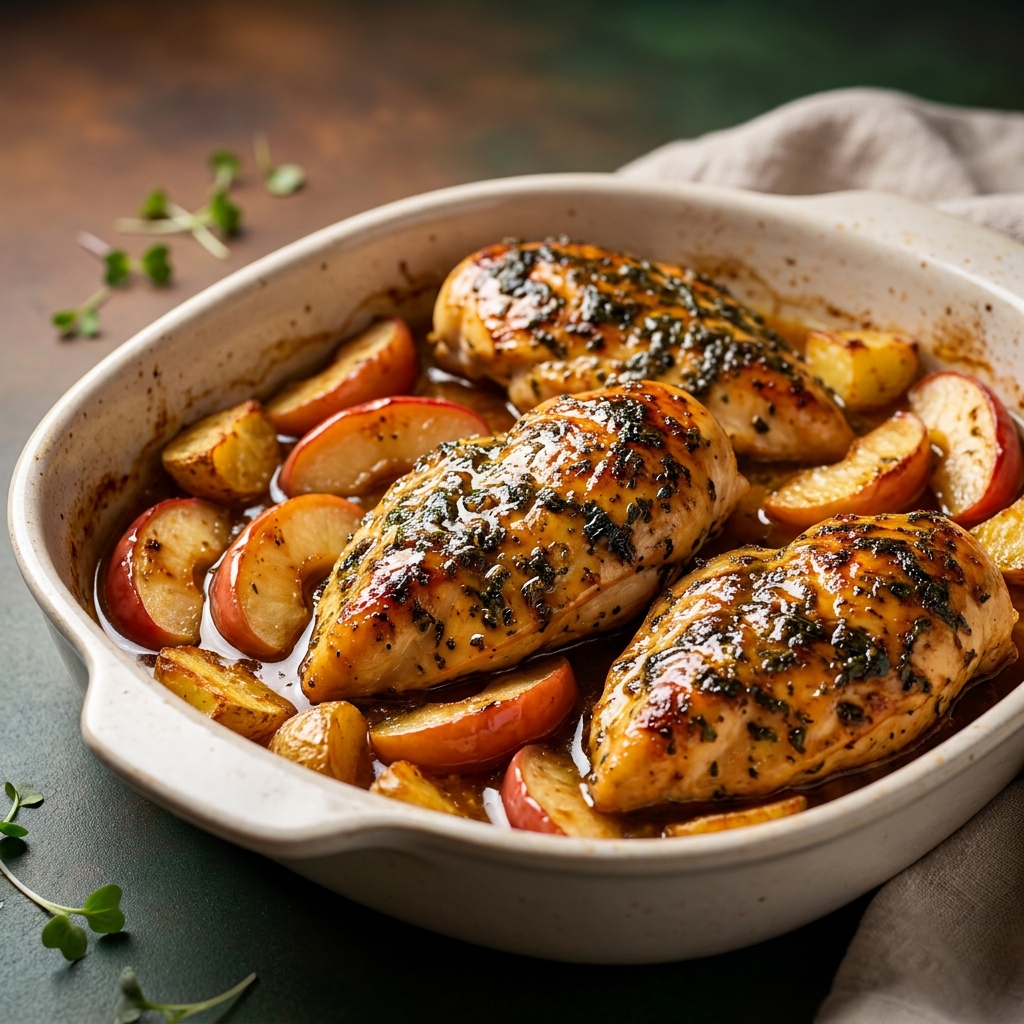
Ingredients
Main Ingredients
- 4 boneless skinless chicken breasts (6–8 oz each)
- 2 Honeycrisp apples, cored and cut into 8 wedges each
- 3 tbsp Dijon mustard
- 3 tbsp honey
- 2 tbsp olive oil
- 1 tbsp apple cider vinegar
- 2 cloves garlic, minced
Seasonings & Flavors
- 1 tsp kosher salt
- 1/2 tsp black pepper
- 1/2 tsp dried thyme
- 1/4 tsp smoked paprika
Optional
- Fresh thyme sprigs
- Crumbled feta cheese
- Toasted chopped pecans
- Flaky sea salt
Instructions
- 1Prep and Season the Chicken: Pat 4 boneless skinless chicken breasts completely dry with paper towels. Moisture on the surface is why glaze slides off instead of sticking. If any breast is thicker than 1.5 inches on one end, place it in a zip-top bag and pound gently to even thickness. Combine 1 tsp kosher salt, 1/2 tsp black pepper, 1/2 tsp dried thyme, and 1/4 tsp smoked paprika in a small bowl. Sprinkle the seasoning on both sides of each breast. Press it in with your fingers so it adheres. What to watch for: if the chicken looks wet when you season it, the spices will clump and slide — dry it more.
- 2Make the Honey Dijon Glaze: In a medium bowl, whisk together 3 tbsp Dijon mustard, 3 tbsp honey, 2 tbsp olive oil, 1 tbsp apple cider vinegar, and 2 minced garlic cloves. Whisk vigorously for about 30 seconds until the mixture is smooth and fully emulsified with no oil streaks on the surface. You should see a thick, glossy paste that coats the back of a spoon. If the glaze looks thin and separated, keep whisking — the mustard acts as the emulsifier that binds honey and oil together. What to watch for: a separated glaze means it will pool at the pan bottom instead of coating the chicken.
- 3Assemble the Bake: Preheat your oven to 375°F. Lightly oil a 9×13 inch baking dish or line it with parchment paper. Arrange the seasoned chicken breasts in a single layer with at least an inch of space between each piece. Tuck 2 cored and sliced Honeycrisp apples around the chicken in the gaps. Pour the glaze evenly over the chicken and apples, using a silicone brush to coat every surface. Flip each breast once so both sides are glazed. What to watch for: if chicken pieces touch, they steam instead of bake and the glaze won't caramelize properly.
- 4First Bake — Covered: Cover the baking dish tightly with aluminum foil. Bake at 375°F for 15 minutes. The foil traps steam so the chicken cooks gently and the glaze heats without burning. You'll smell honey and mustard warming but not browning. The apples will start to soften at the edges but still hold their wedge shape. What to watch for: if you see smoke or smell burnt sugar before 15 minutes, your oven runs hot — drop the temperature to 350°F and continue covered.
- 5Uncover, Baste, and Finish Baking: Remove the foil carefully — hot steam will escape. Use a silicone basting brush to scoop the pooled glaze from the pan bottom and paint it back over the chicken and apples. Return to the oven uncovered and bake another 8–13 minutes at 375°F. The chicken is done when the internal temperature reaches 165°F at the thickest part. Visually, the glaze should be deep amber and sticky, the apple edges should be caramelized and slightly wrinkled, and the chicken surface should glisten. What to watch for: if the glaze darkens past deep amber toward black before the chicken hits 165°F, tent loosely with foil and continue baking.
- 6Rest and Serve: Remove the dish from the oven and transfer the chicken to a cutting board or platter. Let it rest for 5 minutes before slicing or serving. Resting lets the muscle fibers relax and redistribute juices — cut too early and you'll lose moisture on the board. Spoon the caramelized apples and any remaining pan glaze over the chicken. Garnish with fresh thyme sprigs, crumbled feta, or toasted pecans if using. What to watch for: clear juice pooling under the chicken during rest means it's perfectly cooked — pink juice means it needed another minute or two.
Recipe Notes
- Chef tip: Baste twice during the uncovered baking stage — once right after removing the foil and again 5 minutes before the chicken is done. Each basting layer builds on the last and creates a lacquered, restaurant-quality finish.
- Best substitution: Swap Honeycrisp apples for Fuji if needed. They're slightly sweeter and hold their shape almost as well. Do not use McIntosh or Gala — both break down too quickly and flood the pan with liquid that dilutes the glaze.
- Make-ahead: You can assemble the entire dish, cover tightly, and refrigerate up to 12 hours before baking. Add 3–5 extra minutes to the covered baking stage since everything starts cold. Do not freeze the assembled dish raw — raw apples weep moisture and ruin the glaze.
- Scaling: Double the recipe for a crowd using two 9×13 pans. Do not crowd more chicken into one dish — the pieces need airflow to caramelize. Double the glaze ingredients but keep the apple count at 3 per pan so the fruit doesn't steam the chicken.
- Troubleshooting: If your honey glaze burned but the chicken is still undercooked, the oven temperature is too high or the pan was uncovered too early. Scrape off the burnt glaze, tent with foil, lower the oven to 350°F, and bake until the internal temp reaches 165°F. For next time, use the covered-first method at 375°F and check with a probe thermometer instead of guessing by color.
Nutrition Per Serving
- Calories: 326 kcal
- Protein: 31g
- Fat: 11g
- Saturated Fat: 2g
- Carbohydrates: 26g
- Fiber: 2g
- Sugar: 13g
- Sodium: 520mg
- Cholesterol: 85mg
Nutritional values are estimates only. Actual values may vary by brand and portion size.
Made this recipe?
I’d love to see how your Apple Honey Dijon Chicken Breasts — Golden Juicy Bake turned out — leave a star rating and a comment below. I read every one!
Frequently Asked Questions about Apple Honey Dijon Chicken Breasts — Golden Juicy Bake
Can I use chicken thighs instead of breasts for Apple Honey Dijon Chicken Breasts?
Yes, boneless skinless chicken thighs work well and are actually more forgiving. Thighs stay juicier at higher temperatures, so they're harder to overcook. Bake them at 375°F for 25–30 minutes until the internal temp hits 165°F. The glaze and apples stay the same. Thighs release more fat, so you may need to drain some liquid halfway through before basting.
Why does my honey glaze burn before the chicken is cooked through?
Honey caramelizes at around 320°F, but chicken needs to reach 165°F internally, which takes longer than the glaze can handle at high oven temps. The fix is the two-stage bake: cover with foil for the first 15 minutes so the glaze warms without burning, then uncover for the final 8–13 minutes to caramelize. If it still burns, drop the oven to 350°F and tent loosely with foil. A probe thermometer removes the guesswork entirely.
What apples work best for Apple Honey Dijon Chicken Breasts?
Honeycrisp apples are the best choice because they hold their wedge shape under heat and have a balanced sweet-tart flavor. Fuji apples are a close second. Granny Smiths work if you want more tartness, but they cook slightly softer. Avoid McIntosh and Gala — they break down into mush and flood the pan with juice that thins the glaze. Whatever you pick, cut uniform wedges so they soften evenly.
Can I make this recipe ahead for a holiday dinner?
Yes, this is a great make-ahead dish for fall gatherings. Prep the glaze, slice apples, and season chicken up to 24 hours ahead. Store components separately in the fridge and assemble right before baking. For Thanksgiving, serve this alongside roasted vegetables instead of turkey. It also works as a Christmas weeknight dinner when you want something warm but don't want to cook a full feast. Leftovers reheat beautifully the next day.
How do I know when the chicken is done without a thermometer?
Without a thermometer, look for three visual cues. First, the glaze should be deep amber and sticky, not runny. Second, press the thickest part of the breast — it should feel firm with slight bounce, not squishy. Third, cut into the center of the thickest breast — the juices should run completely clear with no pink tint. If you see any pink, bake 5 more minutes and check again. A probe thermometer is always more reliable, and it's worth the investment if you bake chicken regularly.
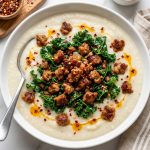
[…] Cauliflower Sausage and Kale Soup fixes a cold gray Tuesday in under 40 minutes. Most versions turn out watery, bland, or wrecked by rubbery kale that tastes like lawn clippings. I’ve cooked this recipe two dozen times and burned through three bad batches before locking in the method. Fennel-heavy sausage hitting a hot pot, then sweet cauliflower softening into cream — you won’t forget that smell. If you love one-pan dinners, my Baked Apple Honey Dijon Chicken Breasts share the same cozy-but-quick energy. Jump to the recipe card or keep reading for my best tips. You might also love my Baked Apple Honey Dijon Chicken Breasts. […]